
Most roofs around here don’t fail all at once. They fail at the details. A cracked pipe boot, a length of flashing that pulled away from a wall, a gutter that stopped draining two seasons ago. Maintenance is the work of finding those things and fixing them while they are still small and still cheap. We have been doing it out of our Rowlett office since 2013.
Sun is what kills a roof here, not water. Shingle surface temperatures run well past 150 degrees on an August afternoon, and that heat cycles up and down every day of the year. Sealant goes brittle. Granules shed. The rubber collars around plumbing vents, the pipe boots, split open. On a lot of Dallas-area homes those boots start failing around year eight to twelve, well before the shingles themselves are finished. Wind lifts tabs along the exposed edges first, and on the lake side of Rowlett and Rockwall it does it faster. Hail is the exception to all of it: it does in one afternoon what the sun takes a decade to do, and it does it to roofs that still had years left.
A maintenance visit is a walk of the whole roof with a camera, followed by the small fixes we can make while we are up there. You get the photos either way.
Vent stacks, exhaust flues, satellite mounts, and old holes left by hardware someone removed. Cracked boots get replaced, not caulked over.
Chimney, step and counter flashing, sidewall terminations, skylight curbs. This is where most of the leaks we chase actually start.
Exposed nail heads, ridge caps and flashing joints get resealed. Sealant is a consumable in this climate. It does not last the life of the roof.
Lifted tabs, slipped shingles, nail pops, granule loss. Bare spots on the mat mean that section is near the end.
Turbines, ridge vent, and soffit intake. Blocked intake cooks the attic and wears the shingles out from underneath.
Cleared, downspouts flushed, hangers checked. Pecan and cedar elm fill a gutter in a single fall.
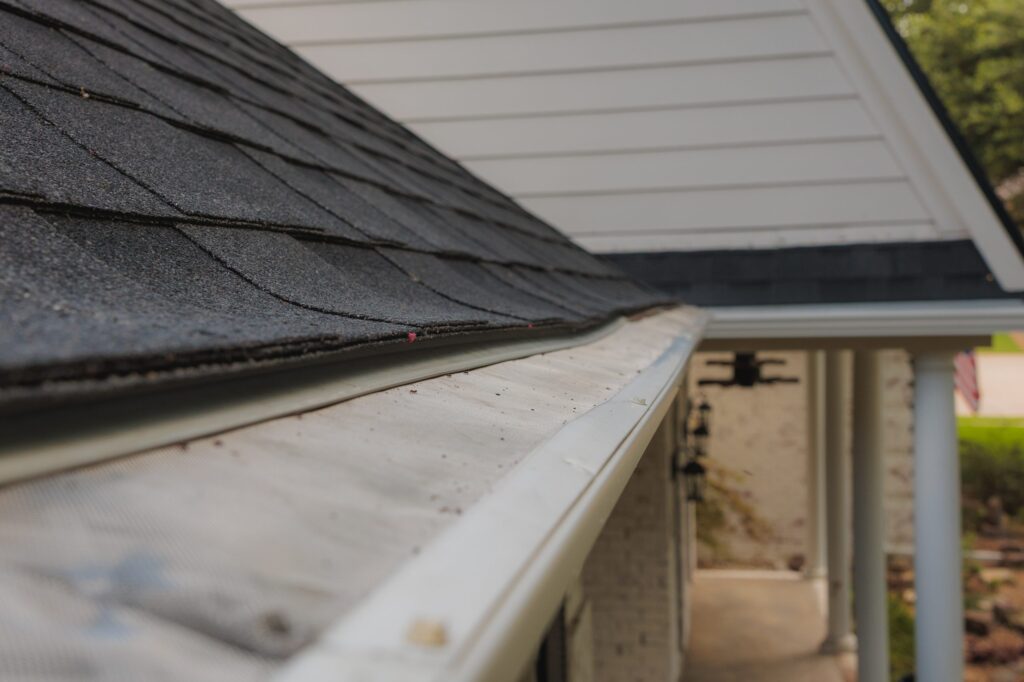
Blackland clay swells when it is wet and shrinks when it dries. A downspout dumping against the slab, or a gutter overflowing along one side of the house, works on that soil every time it rains. Clearing the gutters and getting water out away from the foundation is part of the visit. So is checking fascia and soffit for the soft spots that show a gutter has been running over the edge for a while.
Get the roof looked at after any hail or high wind, even when nothing is showing inside. A bruised mat can look like nothing for a year and then open up in one week of rain. In Texas you have one year from the date of the storm to file. When damage warrants a claim we photograph what is there and hand you the documentation. You file with your carrier, and we will meet your adjuster on the roof to go through what we found. If something is actively leaking, the emergency line answers out of hours.
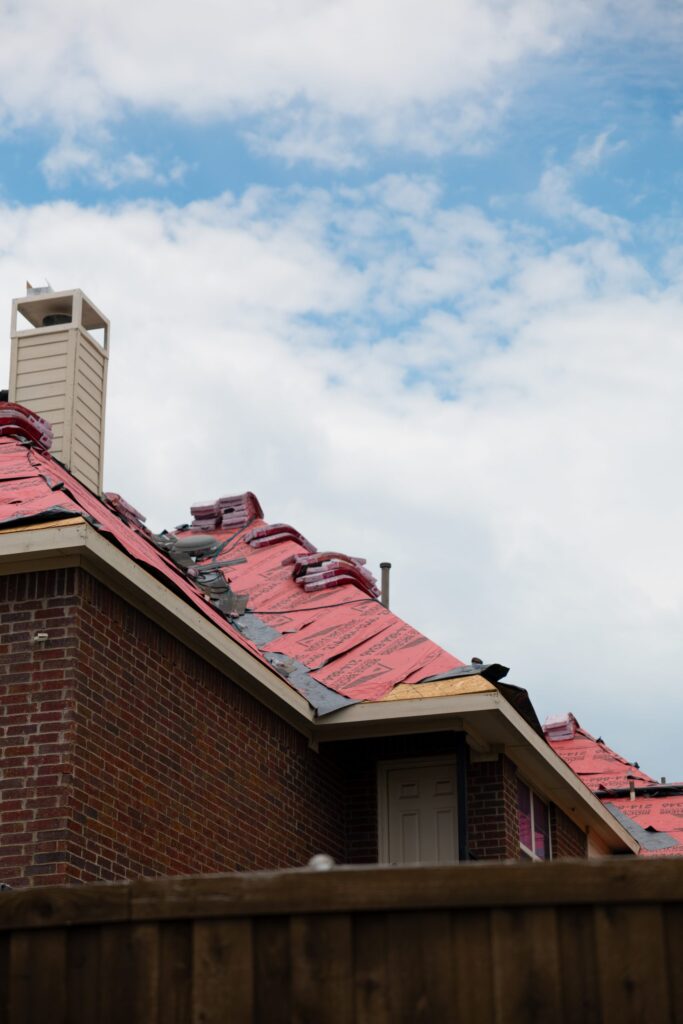
A cracked pipe boot is a small job. The same boot found two years later has usually soaked the decking under it, run down a rafter, and taken out insulation and a section of ceiling. Carriers tend to read slow water damage as wear rather than a covered event, so that part rarely comes back on a claim. Now it is a repair with drywall and paint attached.
Call (214) 884-8346 or email info@rbrc.net. The office is at 4410 Lakeview Pkwy, Ste C in Rowlett, and we cover Rockwall and Kaufman counties and the east side of Dallas County. The roof inspection is free. If all your roof needs is a boot and some sealant, that is what we will tell you. We have run more than 6,000 projects since 2013, and the ones that go easiest are the ones we get to look at before the ceiling is wet.
After any hail or high wind, and any time something changes: a ceiling stain, grit in the gutters, a shingle in the yard. Roofs past ten years old, or under heavy tree cover, are worth a closer look.
No. The roof inspection is free. You pay for repair work, and you hear the price before we do any of it.
Up to a point. Boot replacement, sealing and flashing work will get more years out of a roof whose shingles still have life left. If the mat is bare and the shingles are brittle, repairs stop being worth the money and we will say so.
It can. Photos taken before a storm make it easier to show that new damage is new. Carriers push back hardest on damage that looks like it accumulated over several years.
Yes. On flat and low-slope commercial roofs the problem areas are usually seams, drains, and the curbs around rooftop HVAC units. Same idea, different details.
Call (214) 884-8346. The emergency line answers out of hours. Get a bucket under it, move what you can, and if it is safe to do so, take a photo of where the water is coming through.