Every winter we get calls that go something like this: “There’s water dripping in my attic, but it hasn’t rained in a week.” Nine times out of ten, the roof isn’t leaking. The attic is.
It’s called attic condensation, and the root cause is almost always poor roof ventilation.
How winter attic condensation happens
Your house is full of warm, moist air from showers, cooking, laundry, even breathing. Some of it rises into the attic through ceiling light fixtures, attic hatches and gaps around pipes.
On a cold night, the underside of the roof decking and the tips of the roofing nails get very cold. When warm, moist air hits them, it condenses, just like a cold glass of iced tea sweating on the porch. On the coldest nights it freezes into frost. When the sun comes out and warms the roof, that frost melts and drips.
That’s why it shows up on sunny winter mornings, not rainy ones.
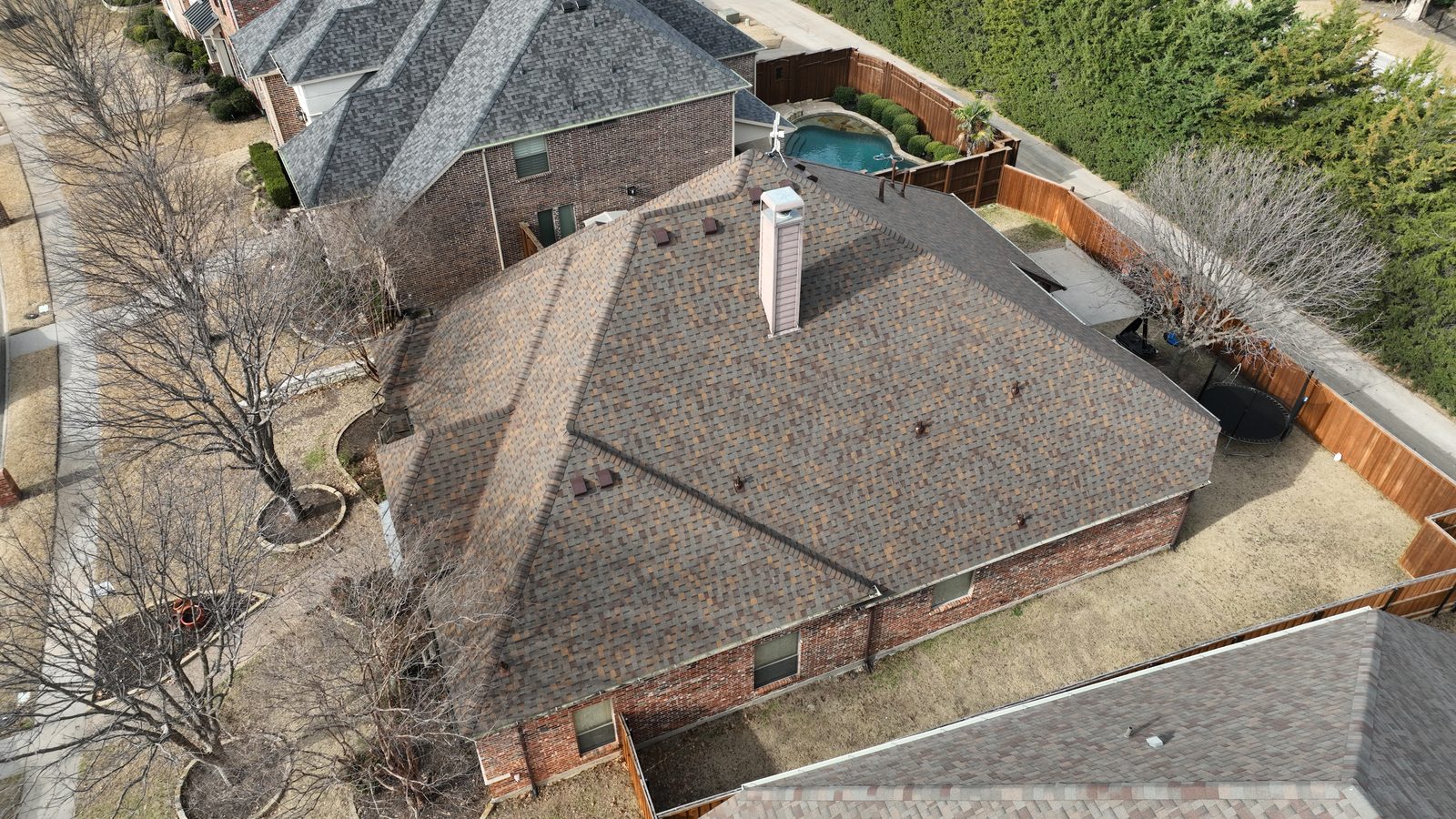
Signs of a poorly ventilated attic
- Frost or water droplets on nail tips poking through the decking (“sweating nails”)
- Dark staining or mildew on the underside of the decking
- Damp or compressed insulation
- Rusted nails or metal straps in the attic
- Ice ridges at the eaves during a long freeze (see our post on ice storms and ice dams)
- In summer: an attic that feels like an oven and high cooling bills
How roof ventilation is supposed to work
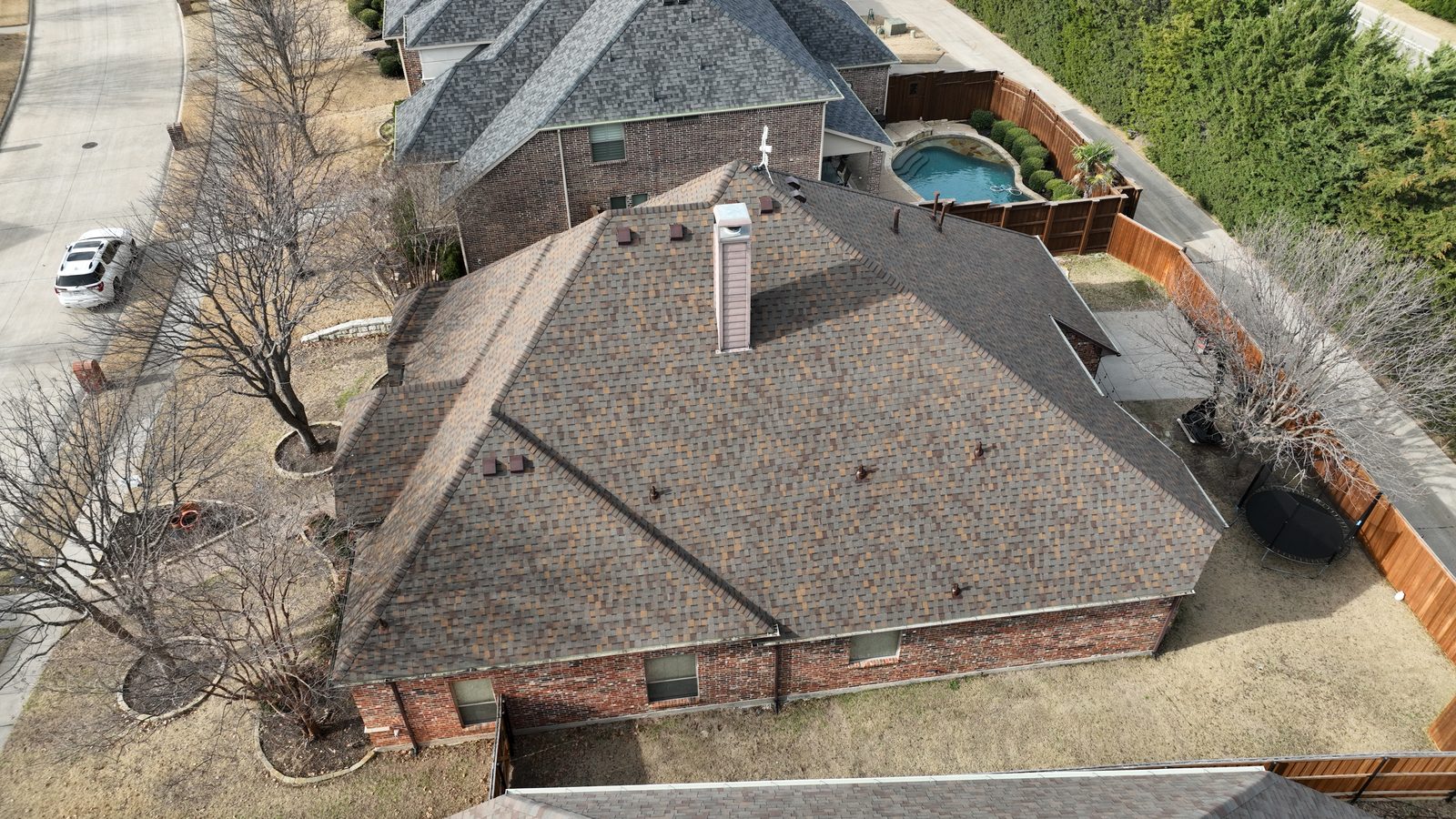
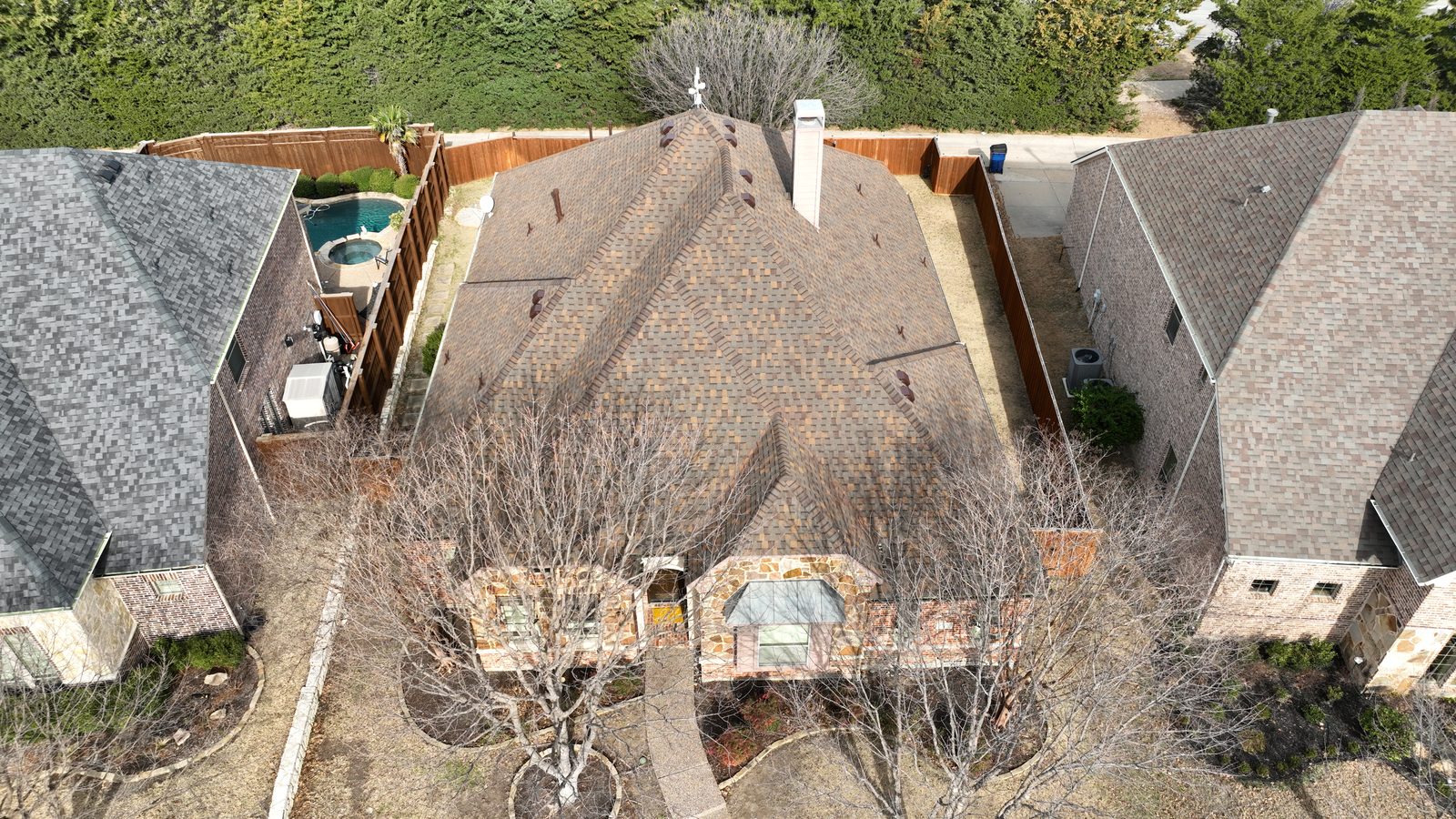
A healthy attic breathes. Cool, dry outside air comes in low through intake vents in the soffits, sweeps up under the decking, and leaves high through exhaust vents at the ridge or near the top of the roof. That steady airflow carries moisture out before it can condense.
The general rule of thumb in building code is about 1 square foot of net free vent area for every 150 square feet of attic floor, or 1 per 300 when intake and exhaust are balanced. Most problems we find come from:
- Blocked soffit vents, often covered by blown-in insulation or painted over
- Too little exhaust on older roofs
- Mixed exhaust types (a ridge vent plus box vents plus a power fan) that short-circuit each other
- Bath fans venting into the attic instead of outside
Why it matters for your roof
Constant moisture rots decking from the inside, rusts fasteners and can void shingle warranties, since manufacturers require proper ventilation. In summer, the same problem bakes shingles from below and shortens their life in Texas heat. Ventilation is a year-round issue that winter makes visible, and a big part of energy-efficient roofing in Texas.
What about attic insulation?
Insulation and ventilation work together. Insulation keeps the warm, moist air in the house. Ventilation removes whatever gets through. Adding insulation without clearing the soffit vents can make condensation worse. Do both.
How we fix it
When we inspect a roof, we check the attic too. Fixes range from simple (clearing soffit vents, adding baffles, re-routing a bath fan) to part of a re-roof (installing a continuous ridge vent and balancing intake). If your roof is due for replacement, that’s the ideal time to get ventilation right.
Water in the attic this winter?
Before you assume the worst, let us take a look. We’ll tell you whether it’s a leak, condensation or both, and what it’ll take to fix. Call Riddle Brothers at (214) 884-8346 or book a free inspection.