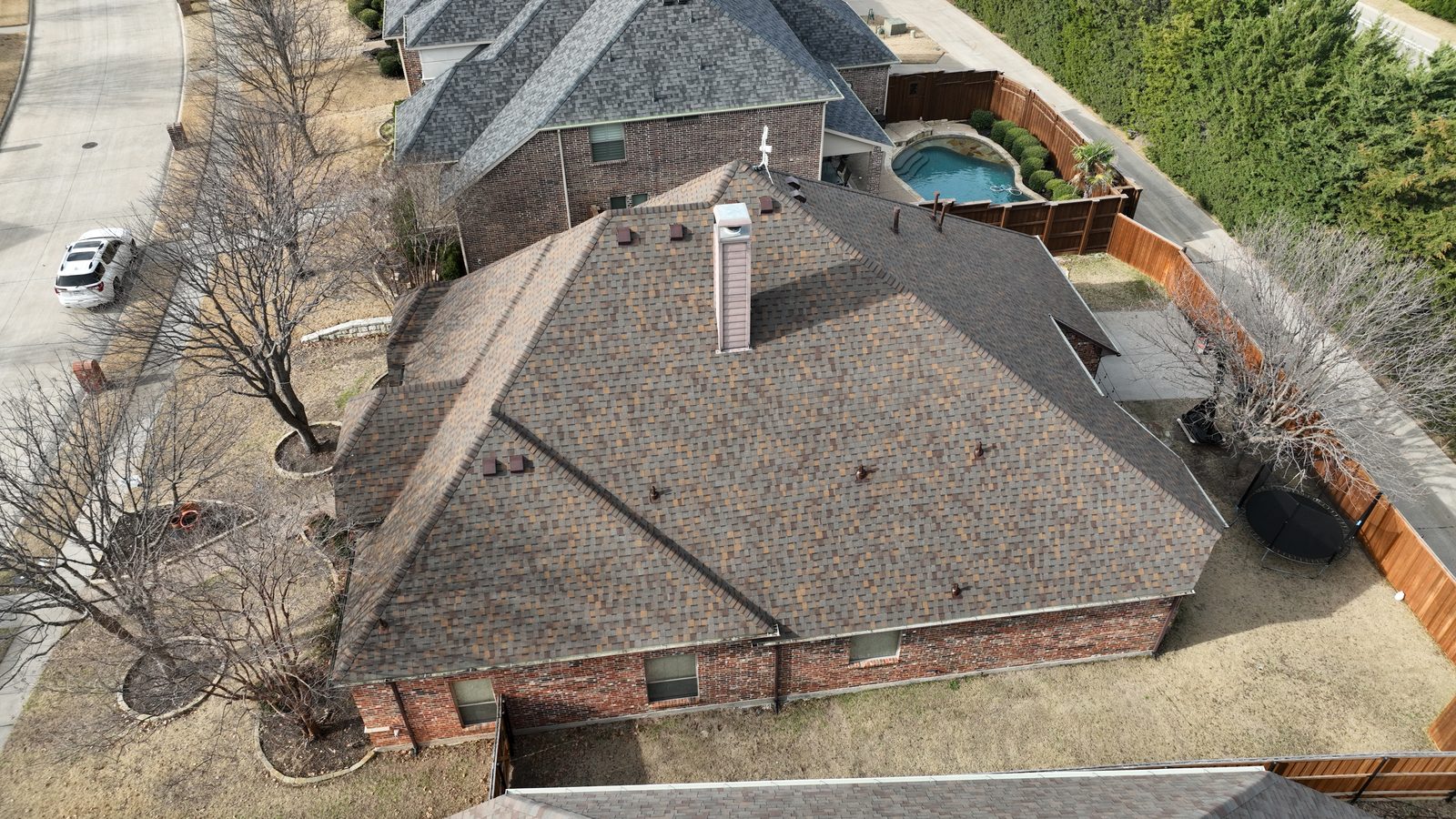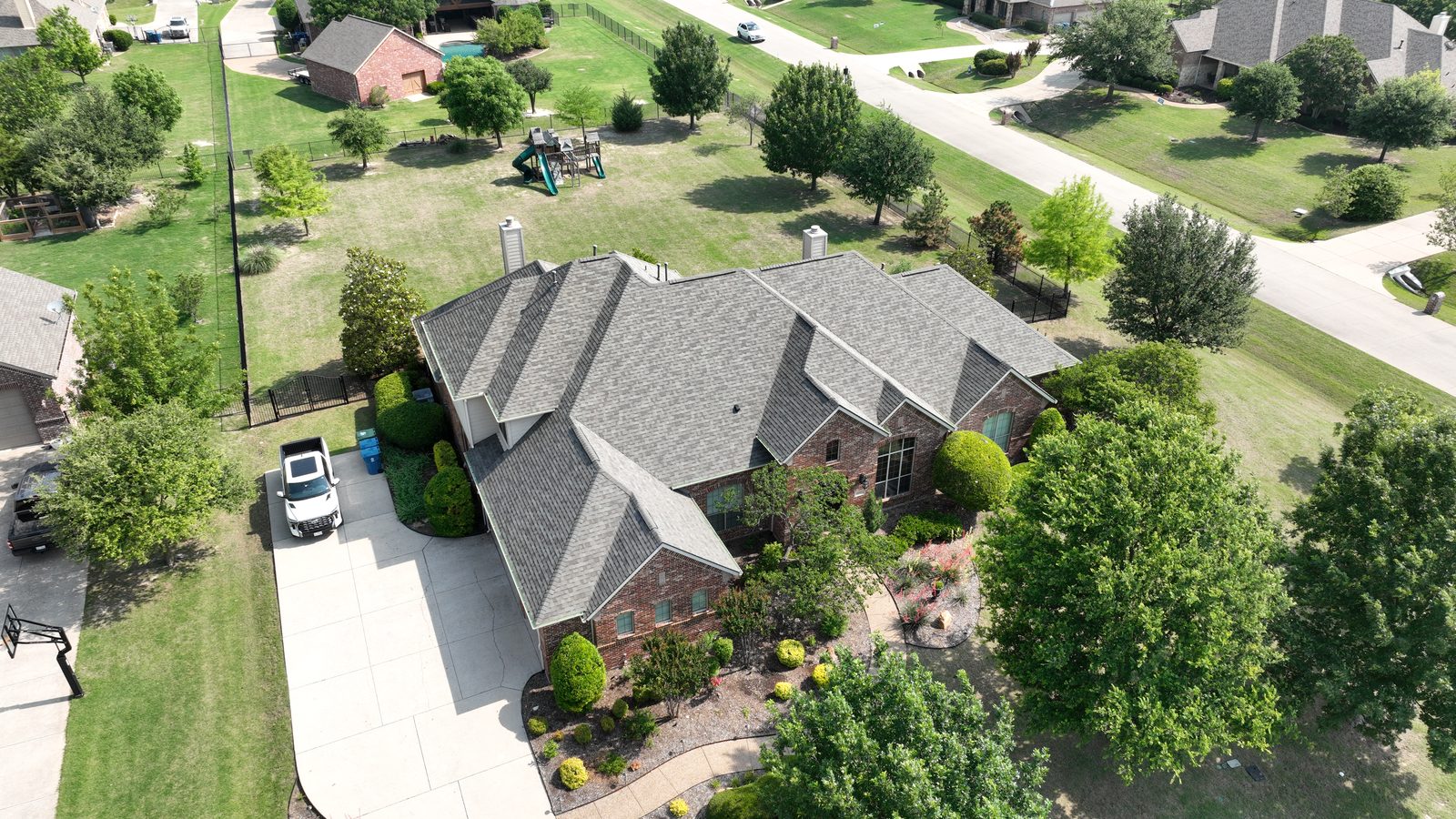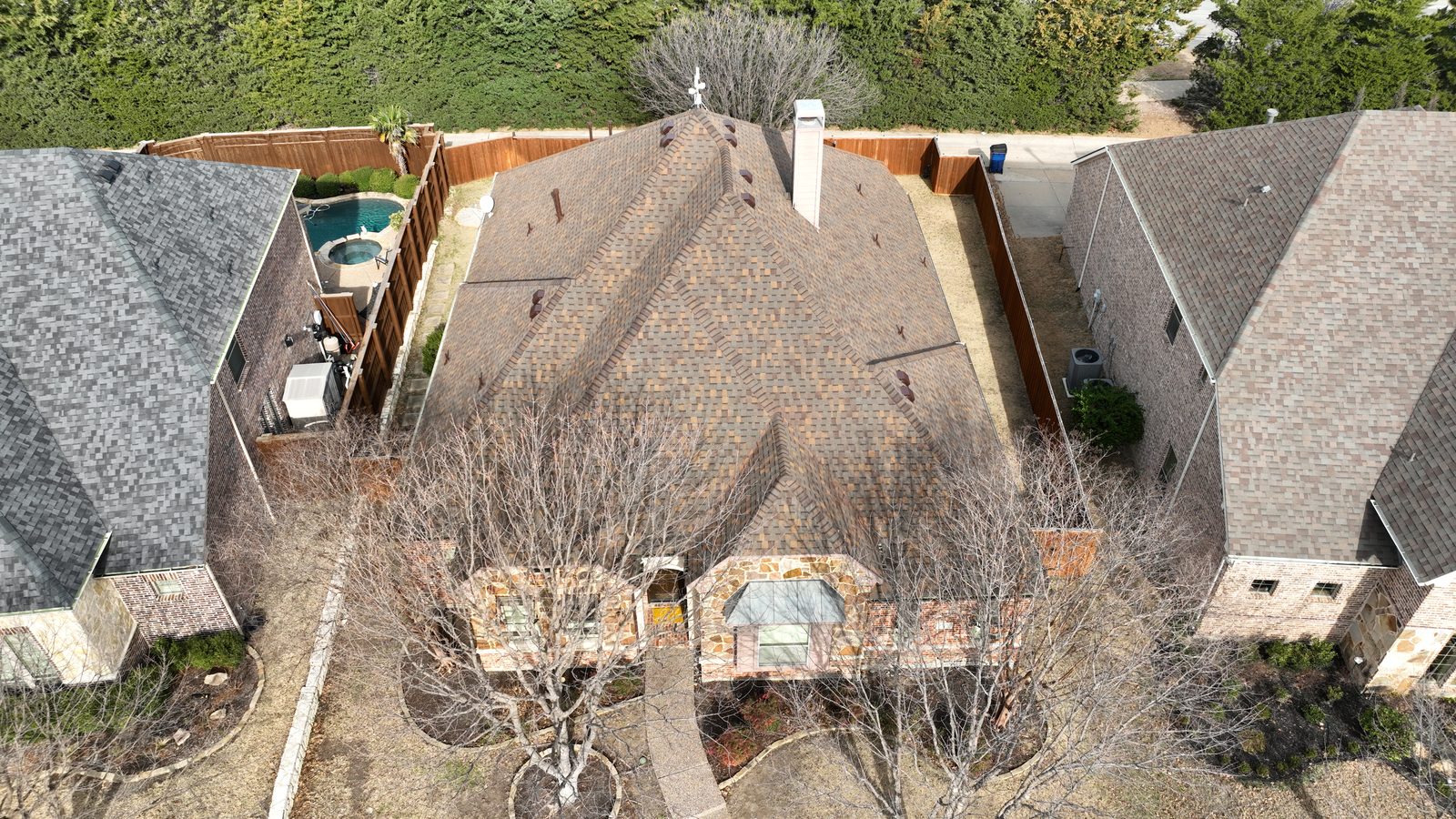
Most years, North Texas gets only a few nights of hard freeze. Every few years, though, an ice storm turns DFW into a skating rink. Winter Storm Uri in February 2021 is the one everybody remembers, and the early-February 2023 ice storm brought down limbs all over the metroplex.
Roofs here aren’t built like roofs in Michigan, so it’s worth knowing what ice actually does to a Texas roof, and what’s just scary-looking.
Are icicles on your roof a problem?
A few small icicles hanging off the gutters after a freeze are usually harmless. They form when water drips off the roof edge and freezes. Pay attention, though, if you see:
- Large, thick icicles along one section of the roof. That can point to heat escaping from the attic in that spot.
- Icicles forming from behind the gutter or out of the soffit, which means water is getting where it shouldn’t.
- Gutters pulling away from the fascia under the weight of the ice.
Don’t knock icicles down from under the roofline, and never hit gutters with a broom or shovel. Falling ice injures people every winter, and you can bend the gutters or crack cold shingles.
What is an ice dam, and can it happen in Texas?
An ice dam is a ridge of ice that forms at the edge of a roof. Heat from the attic melts snow or ice higher up, the water runs down to the colder eaves, and it refreezes there. The ridge grows, water pools behind it, and that water can back up under the shingles and into the house.
Ice dams are rare in North Texas because we rarely have snow sitting on roofs for days. They can happen during a long freeze like Uri, especially on homes with poor attic ventilation or thin insulation. Proper ventilation is the best prevention (see our post on attic condensation and roof ventilation).
What ice storms do to Texas roofs
Falling limbs
Ice weight is the biggest risk. A coating of ice can multiply a branch’s weight many times over, and limbs that have hung over your roof for years suddenly come down. This is the most common source of ice storm roof damage we see.
Cracked or brittle shingles
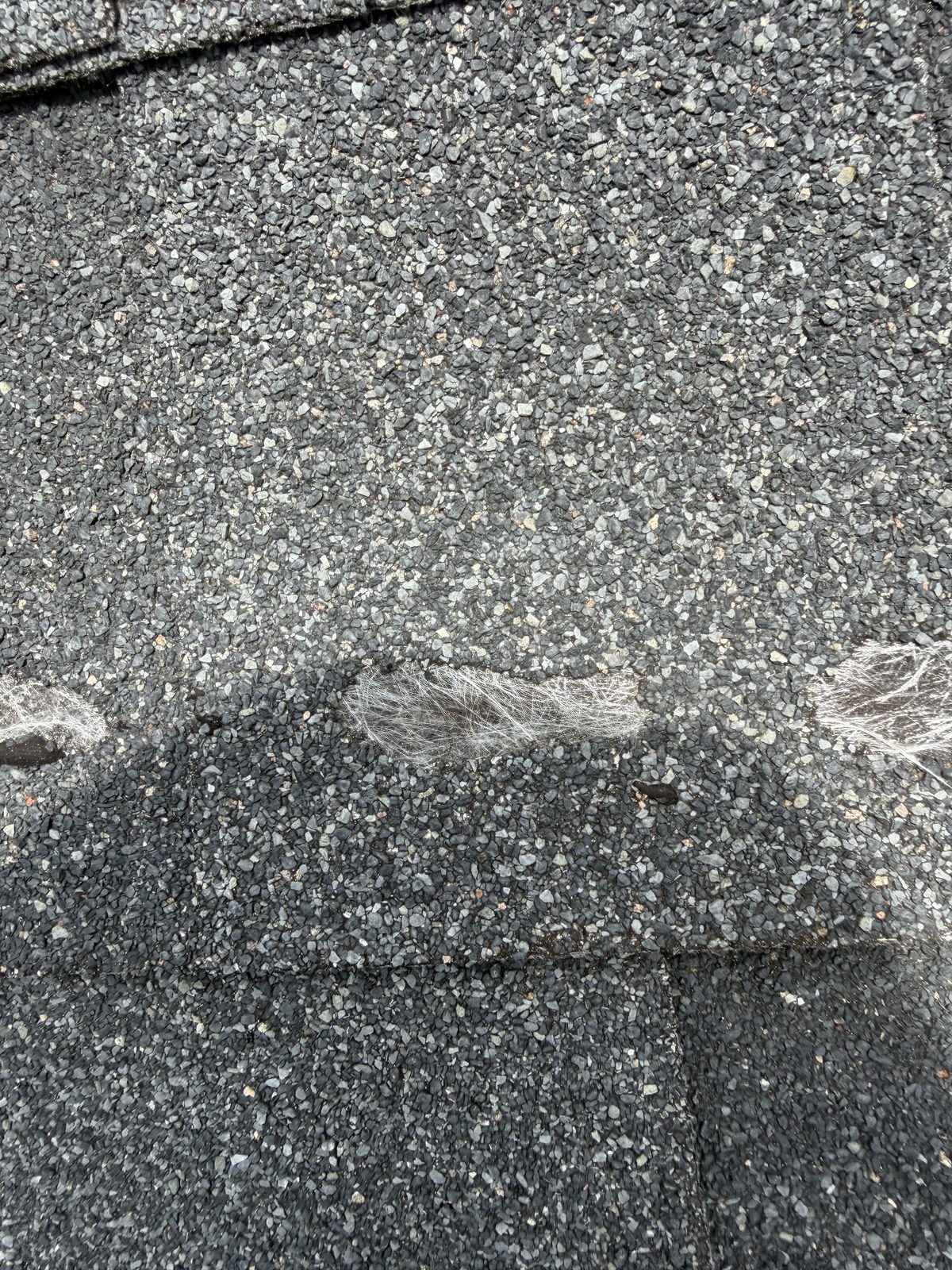
Older asphalt shingles get brittle in the cold. Ice and wind together can crack or tear shingles that were already worn. The damaged shingle in the photo is the kind of thing we find after a hard winter.
Gutter damage
Gutters full of ice can bend, separate at seams or pull off their hangers.
Leaks after the thaw
Often the damage doesn’t show until the ice melts and that water finds an opening. If you notice a new stain on the ceiling a day or two after an ice storm, that’s why. If water is actively coming in, here’s what to do in the first 24 hours.
What is ice and water shield, and do Texas roofs need it?
Ice and water shield is a self-adhering waterproof membrane installed under the shingles in the most leak-prone areas: valleys, around chimneys and skylights, and sometimes along the eaves. It seals around each nail.
Code in North Texas generally doesn’t require it along the eaves the way it does in snow country [confirm local code for RB’s service cities], but we recommend it in valleys and around penetrations on every roof we install. It’s inexpensive protection for exactly the kind of storm we get every few years.
After an ice storm: a quick checklist
- From the ground, look for limbs on the roof or hanging over it.
- Check that gutters are still attached and straight.
- After the thaw, check ceilings, especially near exterior walls, for new stains.
- Check the attic for wet insulation or drips.
- If you see anything, take photos and call for an inspection.
Had ice on your roof this winter?
We’ll come look, free. Riddle Brothers has inspected and repaired roofs across Rowlett, Rockwall and DFW through every Texas winter since 2013. Call (214) 884-8346 or schedule your free inspection.