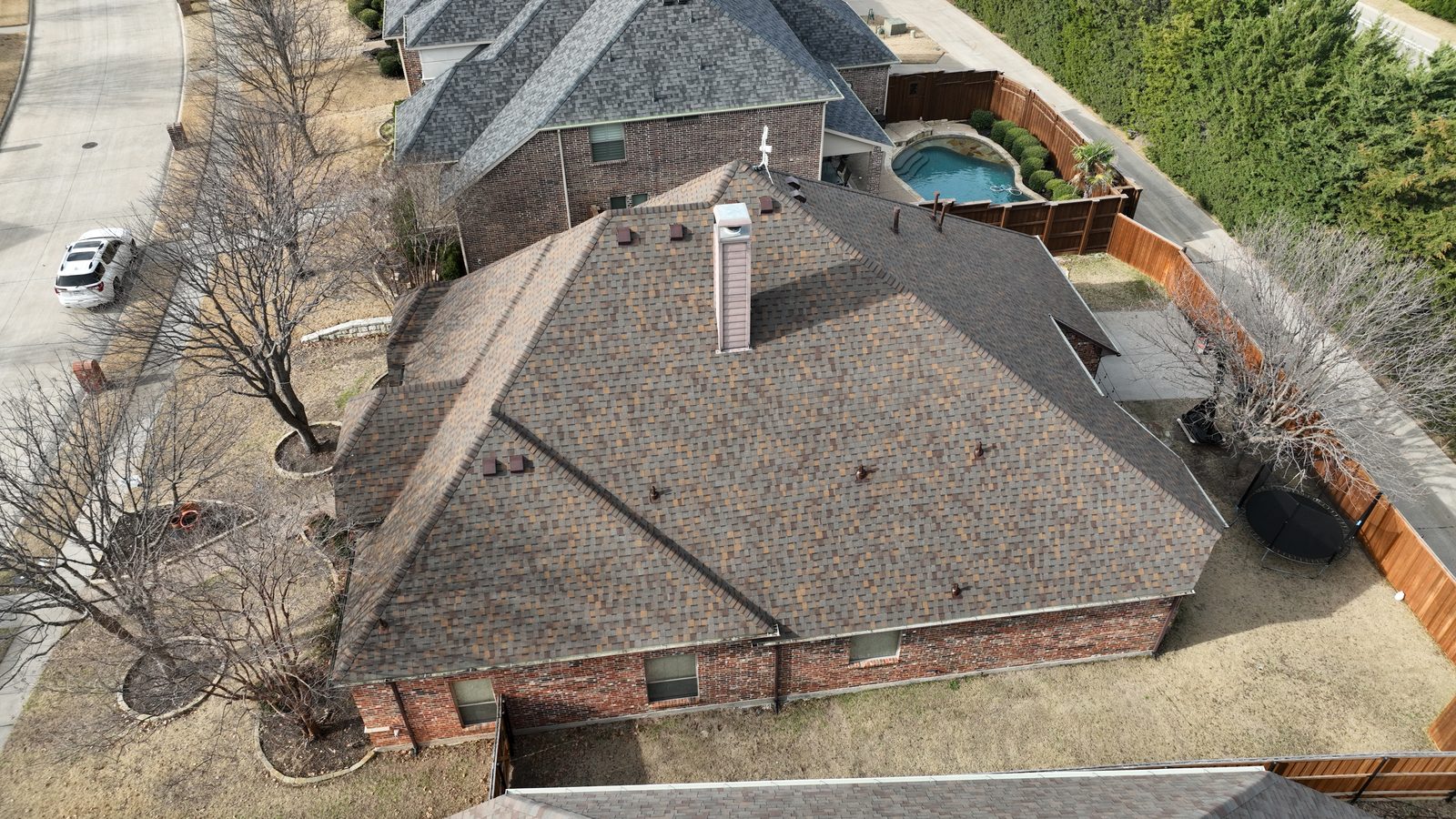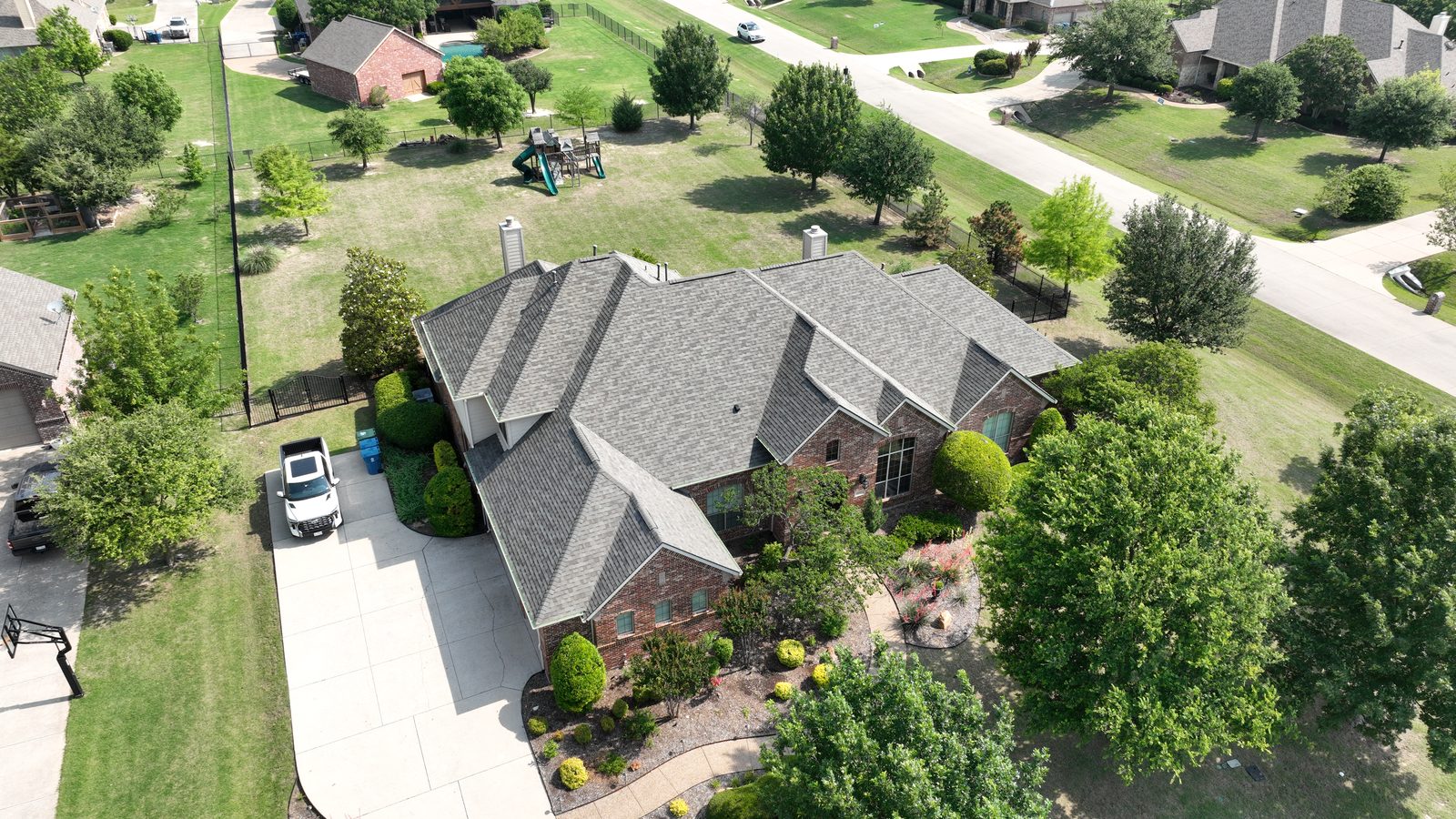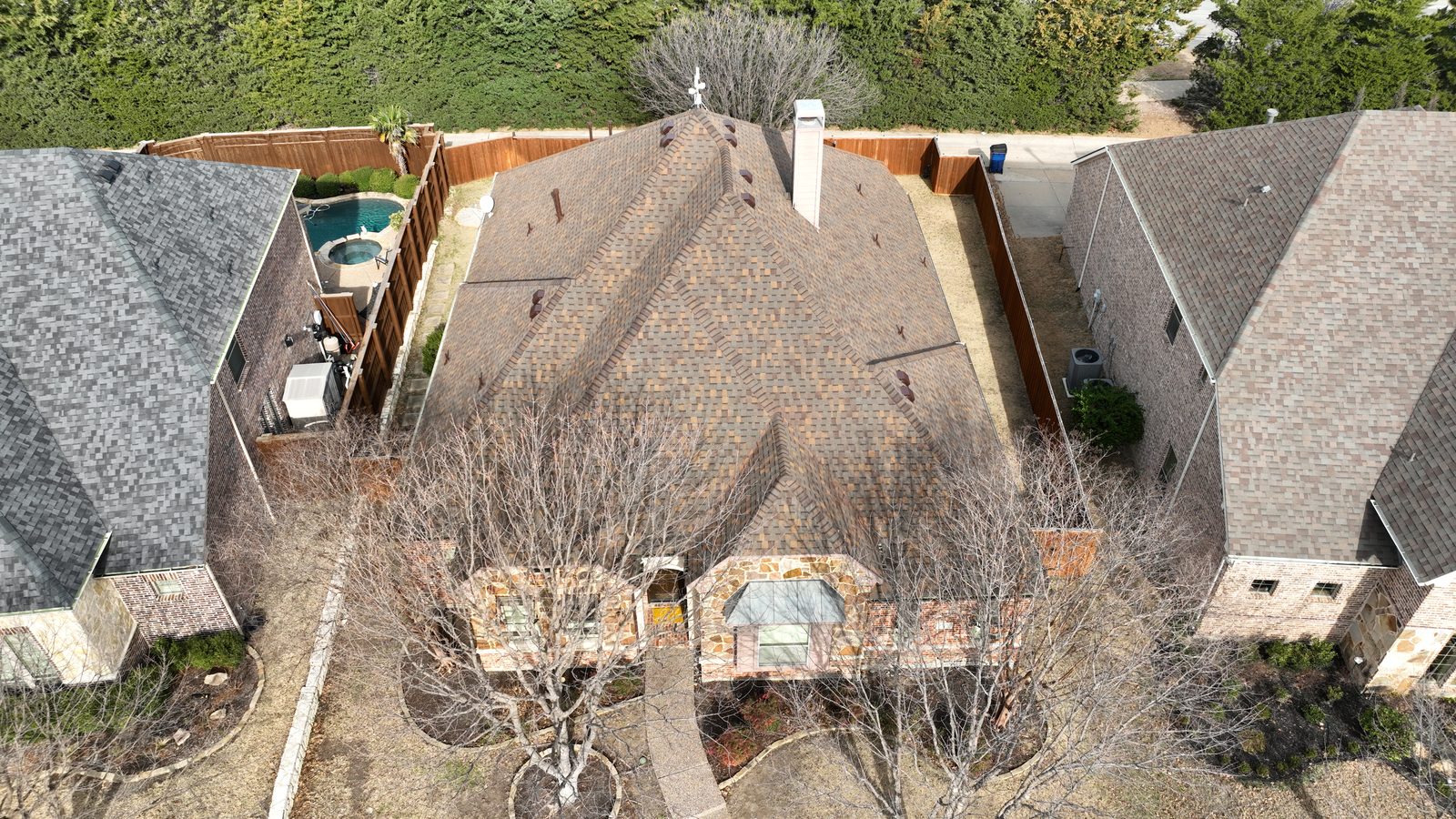
If we had to bet on where a winter roof leak starts, we wouldn’t bet on the shingles. We’d bet on the flashing.
Flashing is the metal (sometimes rubber or membrane) that seals the joints where your roof meets something else: a chimney, a skylight, a wall, a dormer, a plumbing vent. Those joints are where water concentrates, and they move the most as the house heats and cools.
Why flashing fails in winter
- Expansion and contraction. North Texas can swing 40 degrees in a day in winter. Metal flashing, brick chimneys and wood framing all expand and contract at different rates, and over time that movement opens gaps.
- Old caulk. A lot of flashing is “sealed” with caulk that gives up after a few Texas summers. Once it cracks, water gets in.
- Wind-driven rain. Winter fronts push rain sideways, into joints that stay dry in a straight-down summer rain.
- Shortcuts at install. Missing counter-flashing, no kick-out flashing at the bottom of a wall, or flashing simply nailed flat and tarred. We see these all the time. They’re among the most common roofing problems we find.

Chimney leaks
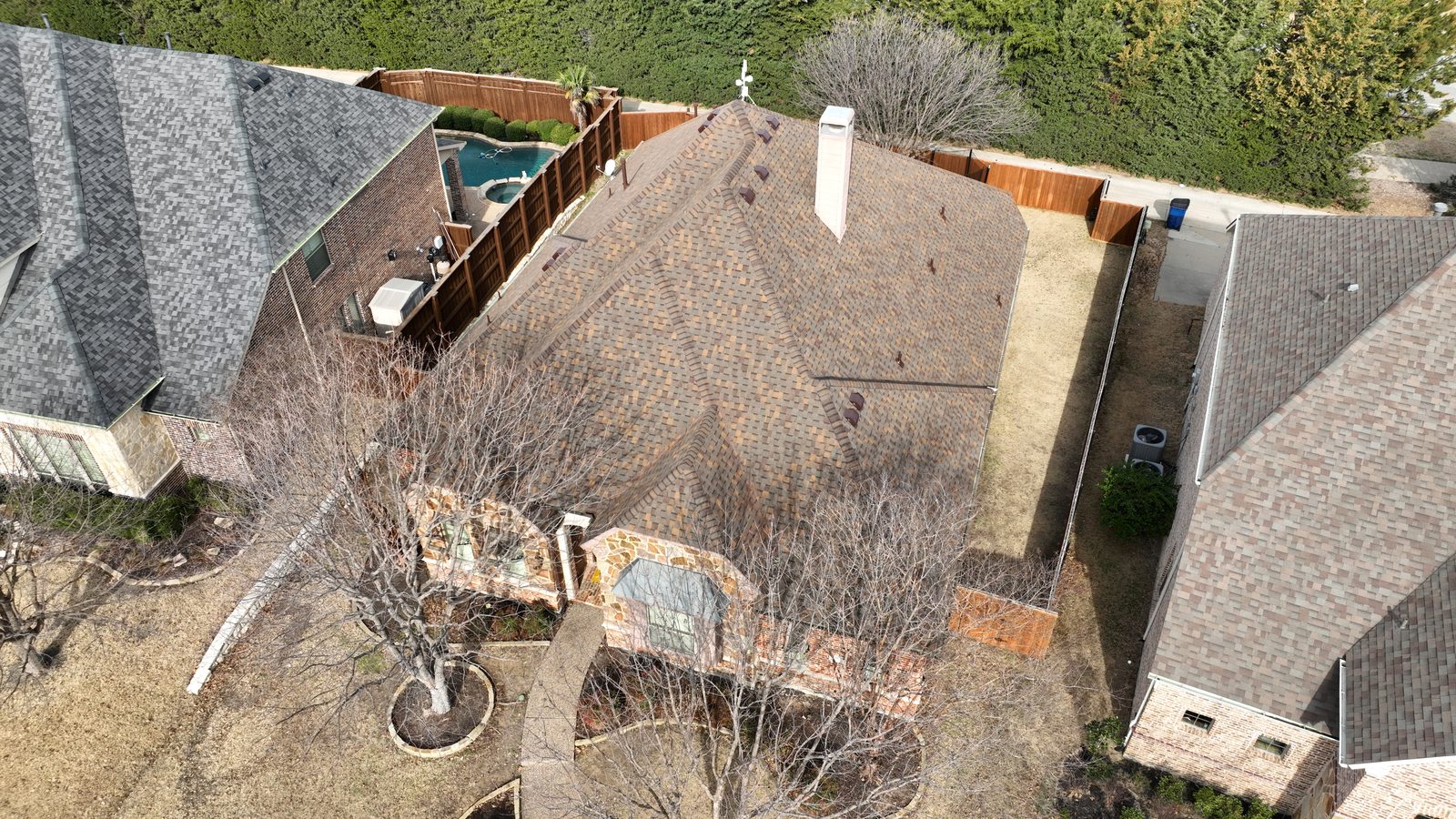
A chimney has a lot going on: step flashing along the sides, counter-flashing cut into the mortar joints, an apron on the downhill side and, on wider chimneys, a cricket (a small peaked structure on the uphill side that splits water around the chimney). Without a cricket, water and debris pile up behind the chimney and eventually find their way in.
Signs of a chimney leak: water stains on the ceiling or wall near the fireplace, damp or crumbling mortar, white mineral stains on the brick, and rust on the firebox or damper. Not every chimney leak is a roof problem. Cracked chimney crowns and missing caps let water in from the top, and we’ll tell you if it’s a job for a chimney specialist.
Skylight leaks
Skylights leak for three main reasons: failed flashing around the curb, a failed seal in the glass itself, or condensation on the inside (which isn’t a leak at all; see our post on attic condensation). If water shows up only on cold, sunny mornings, suspect condensation. If it shows up during rain, suspect flashing. If it’s pouring in right now, start with our emergency checklist.
Wall and dormer flashing
Where a roof runs into a second-story wall, each course of shingles should have its own piece of step flashing tucked behind the siding. At the bottom, a kick-out flashing should direct water into the gutter instead of behind the siding. A missing kick-out causes a surprising amount of hidden rot in DFW homes.
What roof flashing repair involves
A proper flashing repair isn’t another bead of caulk. Depending on what we find, it can mean:
- Removing the shingles around the joint
- Replacing rusted or bent step flashing piece by piece
- Cutting new counter-flashing into the chimney mortar
- Adding ice and water shield underneath
- Building a cricket behind wide chimneys
- Re-shingling and sealing correctly
See what roof leak repair costs in DFW for typical ranges.
Get the leak fixed at the source
If you’ve had the same leak “fixed” with caulk more than once, it’s time to fix it properly. Riddle Brothers will trace it, photograph it and repair it right. Call (214) 884-8346 or schedule a free inspection.