We’ve seen it before: you got an estimate on your roof (maybe even three). The numbers don’t match, the line items don’t line up, and one of them is a single figure on a business card with nothing under it. If you’re trying to figure out what a roof should cost on your house, the useful thing to understand is what moves the number. Here’s what we look at on every replacement in Rowlett, Rockwall and around DFW, and why it changes the price.
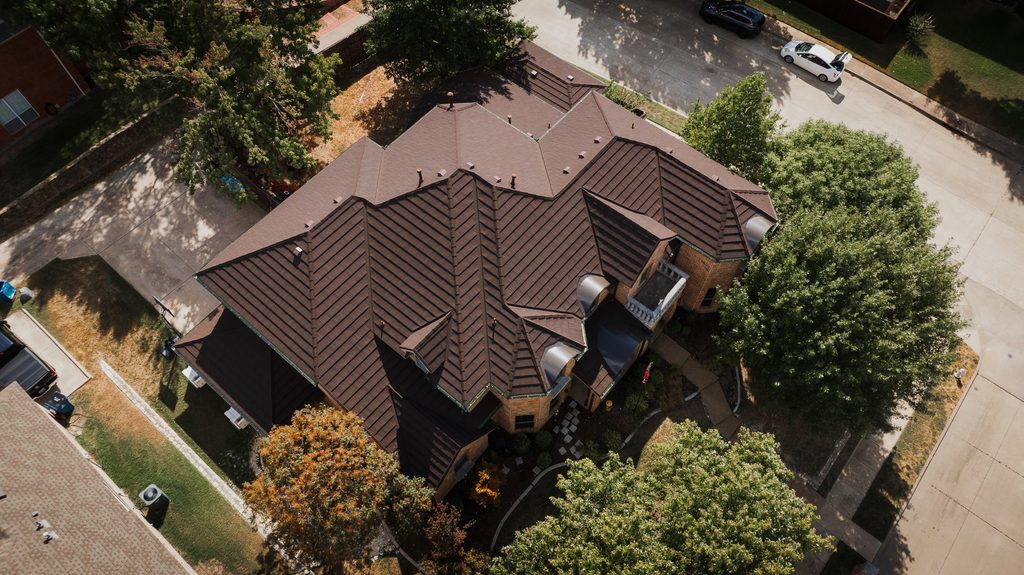
Roofers price by the square, and your house has more of them than you think
A roofing square is 100 square feet of roof surface. That’s the unit everything else hangs on: shingles, underlayment, labor, disposal. Roof area and floor area are two different things. A 2,000-square-foot single-story home with a moderate pitch often lands somewhere in the mid-20s in squares once you account for the slope, the overhangs, and the waste that comes from cutting shingles around hips, valleys and edges. A two-story home with the same floor plan has roughly half the roof.
So the first thing a real estimate needs is a measurement of the roof itself, from the roof. Satellite measurements get the footprint close, but they don’t count layers, see soft decking, or tell you how many pipe boots are about to fail.
Pitch and complexity
Two houses with the same square count can be very different jobs. A low, simple gable roof goes fast. A steep roof with multiple valleys, dormers, a chimney and two skylights takes longer, needs more safety setup, produces more waste, and requires more flashing work at every place two planes meet. Steeper pitches also carry a higher labor rate because the crew is working on harnesses and roof jacks rather than walking freely.
If your house is what roofers call “cut up,” expect that to show in the estimate from every company you talk to.
What’s under the old shingles
Tear-off is the part of the job most homeowners never think about, and it drives a real share of the cost.
Code caps asphalt shingles at two layers. If your house already has two, the whole thing comes off down to the deck before anything new goes on. Even with one layer, most roofs in our area should be torn off rather than covered, because you cannot inspect decking, flashing or ventilation through a layer of old shingles.
Once the old roof is off, the decking gets checked. Plywood or OSB that has taken water for years goes soft, delaminates, or won’t hold a nail. Damaged sheets get replaced, and that’s usually quoted per sheet because nobody can see the decking until the shingles are gone. A good estimate tells you the per-sheet price up front so there are no surprises on build day.
Disposal is in there too. A full tear-off on a typical home fills a dumpster, and that dumpster has a price and a landfill fee attached.
The parts you don’t see once the roof is done
This is where low bids get low. Every one of these is a line item, and every one of them can be skipped or downgraded by a roofer who wants to win on price.
Underlayment is the water barrier between the shingles and the decking. Synthetic underlayment costs more than felt and holds up better in Texas heat. Ice and water shield is a self-adhering membrane that belongs in valleys and around penetrations, where water concentrates. Drip edge is the metal strip along the eaves and rakes that kicks water into the gutter instead of behind the fascia, and code requires it on new roofs. Starter strip goes along the edges so the first course seals down. Hip and ridge shingles cap the peaks. Pipe boots are the rubber collars around plumbing vents, and they’re the single most common leak source we find on inspections. Flashing at chimneys, walls and skylights is either reused or replaced, and the estimate should say which.
Then there’s ventilation. Intake at the soffits, exhaust at the ridge or through box vents, and the two have to be balanced. In North Texas, attic ventilation is what decides how long a roof actually lasts. An attic that runs 140 degrees in July cooks shingles from underneath, and manufacturer warranties generally exclude damage caused by an attic that couldn’t breathe.
When you compare estimates, compare these lines. A bid that leaves them out is a bid for a different roof.
The shingle you pick
Shingle tier is the biggest single choice you get to make, and it’s usually a good-better-best decision.
Three-tab shingles are the entry level: flat, uniform, and the shortest lifespan of the group. Architectural (or laminate) shingles are the standard on most homes now, with a thicker profile, a dimensional look and a longer warranty. Designer shingles sit above that with heavier construction and a slate or shake appearance. Within each tier you can also step up to an impact-resistant shingle, rated Class 3 or Class 4 for hail, which costs more per square and may qualify you for a discount from your insurer. Metal and tile are different categories with different labor, different underlayment requirements and much longer service lives, and they’re priced accordingly.
The warranty follows the shingle. Higher tiers carry longer non-prorated coverage from the manufacturer, and some enhanced warranties are only available when a certified contractor installs the full system of matching components.
Everything that isn’t the roof
A handful of things sit outside the shingles and still land on the estimate. Gutters that get damaged during tear-off or that you want replaced at the same time. Permit fees, which vary by city across Rowlett, Rockwall, Garland, Wylie and the rest of DFW. A satellite dish that has to come down and go back up. Detached garages and patio covers, which are separate roofs with their own square counts. Difficult access, like a house with no driveway clearance for a dumpster or a roof that requires a lift.
Written right, none of these are surprises. They’re on the estimate before anyone climbs a ladder.
Why we won’t price your roof from the driveway
You can’t count layers from the street. You can’t feel soft decking from a truck. You can’t see a cracked pipe boot from the ground, and on a lot of roofs you can’t see hail bruising either. A number given without getting on the roof is a guess, and a guess that happens to be low is how you end up with change orders on build day.
Our estimate comes after we’ve walked the roof, photographed what’s there, and counted what has to be replaced. It’s itemized, so you can compare it to anyone else’s line by line. And if the roof doesn’t need replacing, we’ll tell you that instead. Some of our best reviews are from homeowners we told not to buy a roof.
If a replacement is the right call, you have options for paying for it. The roof price is the same whether you pay in full or finance it, and our financing page lets you run monthly payment numbers without giving us your name.
Quick answers about roof replacement pricing in North Texas
Why are two estimates for the same house thousands apart? Usually one of three things: a different shingle tier, a different amount of underlayment and flashing work, or one roofer skipping tear-off and decking allowances that the other included. Line the two up side by side and the gap is almost always explainable.
Can you give me a ballpark over the phone? We can tell you what typically drives the price on a house like yours. We can’t give you a number you should hold us to until someone has measured the roof and looked at the decking.
Does the price change if I finance? No. The roof costs what the roof costs. Financing changes how you pay for it, and the price itself stays the same.
How long does a replacement take? Most single-family roofs in our area are torn off and reroofed in a day or two, weather permitting. Steep or complex roofs, decking replacement, or a metal or tile install can add time.
Should I get more than one estimate? Yes! Then compare the line items, the shingle spec, the underlayment, the ventilation plan and the workmanship warranty before you look at the total at the bottom.
Rooted in Rowlett since 2013
Riddle Brothers has been replacing roofs across Rowlett, Rockwall, Garland, Wylie and the greater DFW area since 2013. We’re family owned and ensure the estimate you get is the one we’d want if it were our house. Book your free inspection or call (214) 427-8149, and we’ll tell you where your roof actually stands.