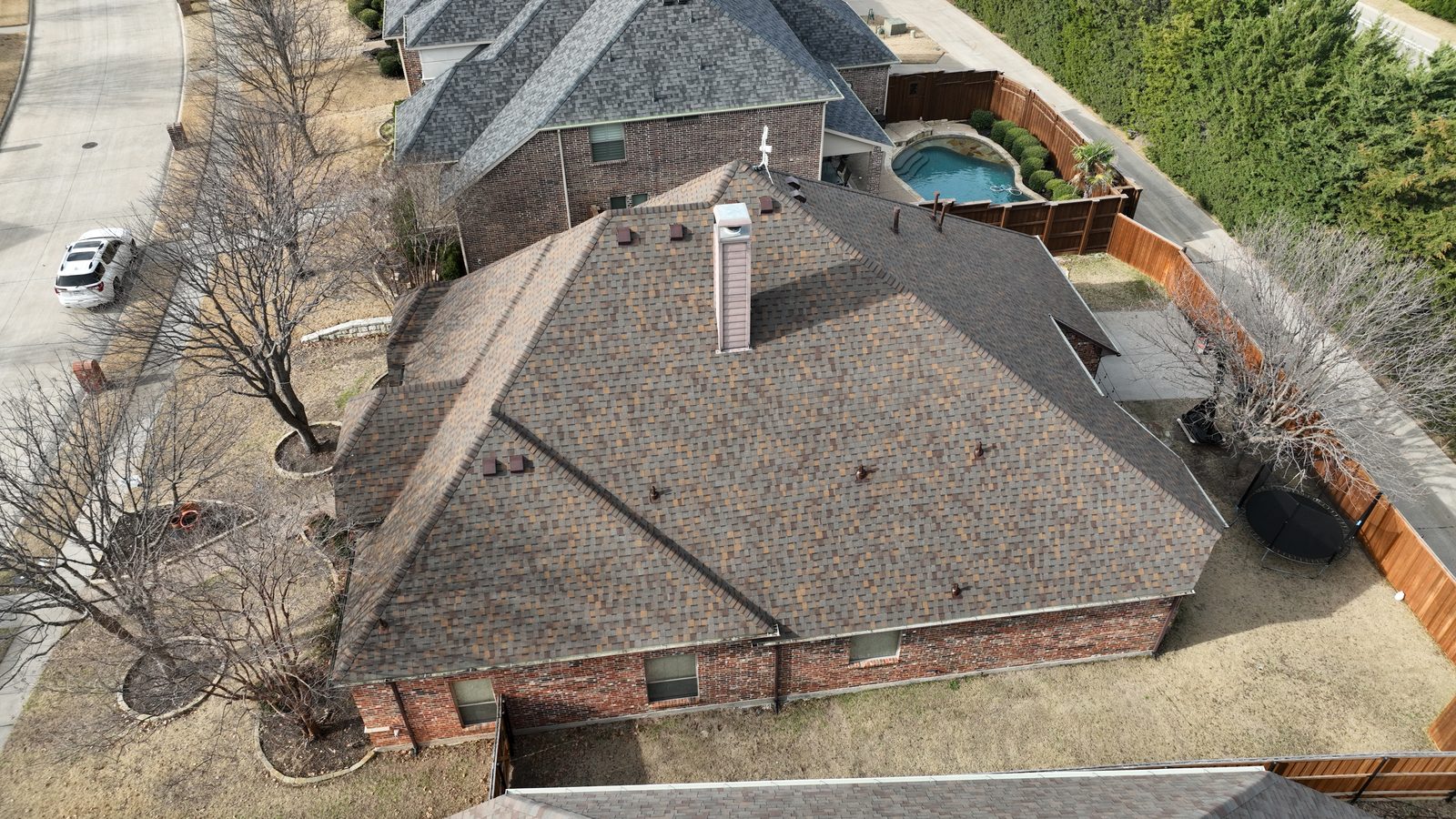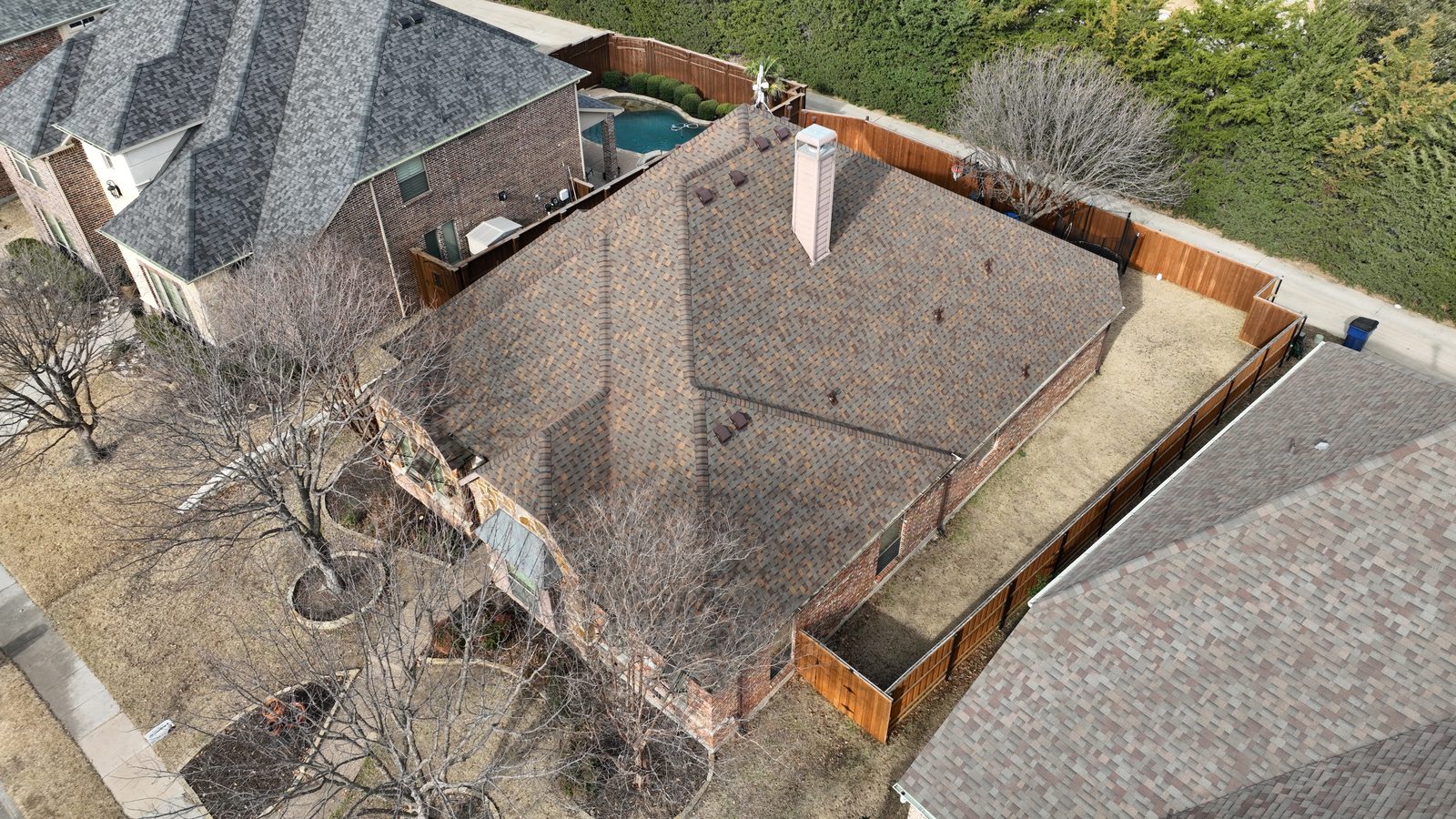
North Texas winters are mostly mild, but a few days each year can do real damage: a hard freeze, an ice storm, a blue norther with 50 mph gusts. A roof that’s ready handles those days fine. A roof with a loose shingle, a clogged gutter or a cracked pipe boot is how you end up calling us at 2 a.m.
Here’s the winter roof maintenance checklist we’d give our own families. Most of it you can do from the ground or a ladder. Leave anything on the roof itself to a pro, especially when it’s cold. Shingles get slick and brittle.
The 10-point winter roof checklist
1. Clean out the gutters (after the leaves are down)
In DFW the oaks and pecans drop late, so wait until mid-to-late November and clean them once. Clogged gutters hold water, and when that water freezes it adds weight, pulls on fasteners and can back up under the edge of the roof.
2. Check downspouts and drainage
Make sure downspouts are attached and drain away from the foundation. A disconnected downspout during a freeze can leave an ice sheet on your sidewalk or driveway.
3. Look for missing, lifted or creased shingles
From the yard, with binoculars if you have them, scan each roof slope. Look for shingles that are a different color (missing granules), sitting up at an edge, or showing a horizontal crease. Those are usually wind damage. (More in our post on winter wind damage.)
4. Check the flashing around chimneys and walls
Metal flashing where the roof meets a chimney, wall or skylight is where most winter leaks start. Look for gaps, rust or caulk that’s pulling away.
5. Inspect pipe boots and vents
The rubber collars around plumbing vents crack after years of Texas sun. A cracked boot is a small, cheap fix until it lets water into the ceiling. It’s one of the most common roofing problems we see.
6. Trim branches over the roof
Ice storms are when overhanging limbs come down. Branches within 6–10 feet of the roof should be trimmed back before winter.
7. Go up in the attic on a cold morning
Bring a flashlight. Look for frost on nail tips, damp spots on the decking, or stains on the insulation. Those point to ventilation or moisture problems (see our post on attic condensation).
8. Check attic insulation depth
Thin insulation means warm air escaping into the attic, which drives condensation and higher heating bills.
9. Make sure the roof is clear of debris
Leaves and sticks piled in valleys hold moisture and slow drainage. If there’s a lot, have it cleared. Don’t climb up on a cold, wet roof yourself.
10. Get a professional inspection if your roof is 10+ years old
In North Texas, getting about ten years out of a roof means you’ve had your money’s worth. If yours is in that range, or you went through a hailstorm this year, a pre-winter inspection is the cheapest insurance you can buy.
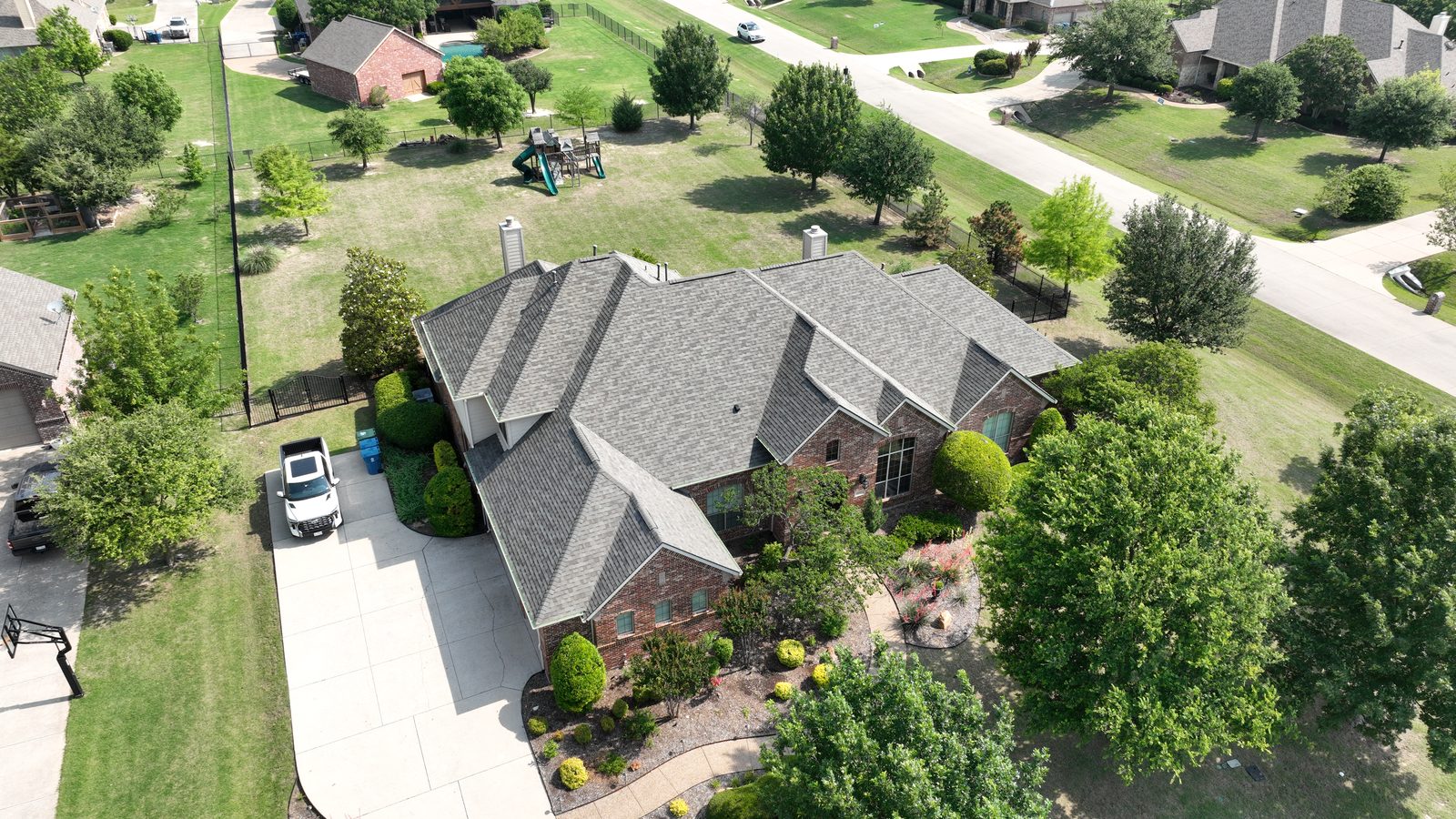
What about frozen gutters?
We don’t get the kind of freeze-thaw cycles that wreck gutters up north, but during a multi-day freeze (like Winter Storm Uri in February 2021), gutters full of debris can turn into troughs of ice. The weight can bend hangers and pull gutters off the fascia. Clean gutters drain before they freeze. If you see ice in your gutters, don’t chip at it with anything sharp. Let it melt and check for damage afterward.
Are gutter guards worth it? If your house sits under big trees, often yes. They cut down on clogs, but they still need an occasional check. [If RB installs gutter guards, add a sentence plus a link to the Gutter Repair page.]
Don’t want to climb a ladder in December?
We get it. Riddle Brothers offers free roof inspections across Rowlett, Rockwall, Garland, Wylie and the rest of DFW. We’ll check every item on this list, photograph what we find and tell you honestly what needs attention and what doesn’t. Call (214) 884-8346 or book online.