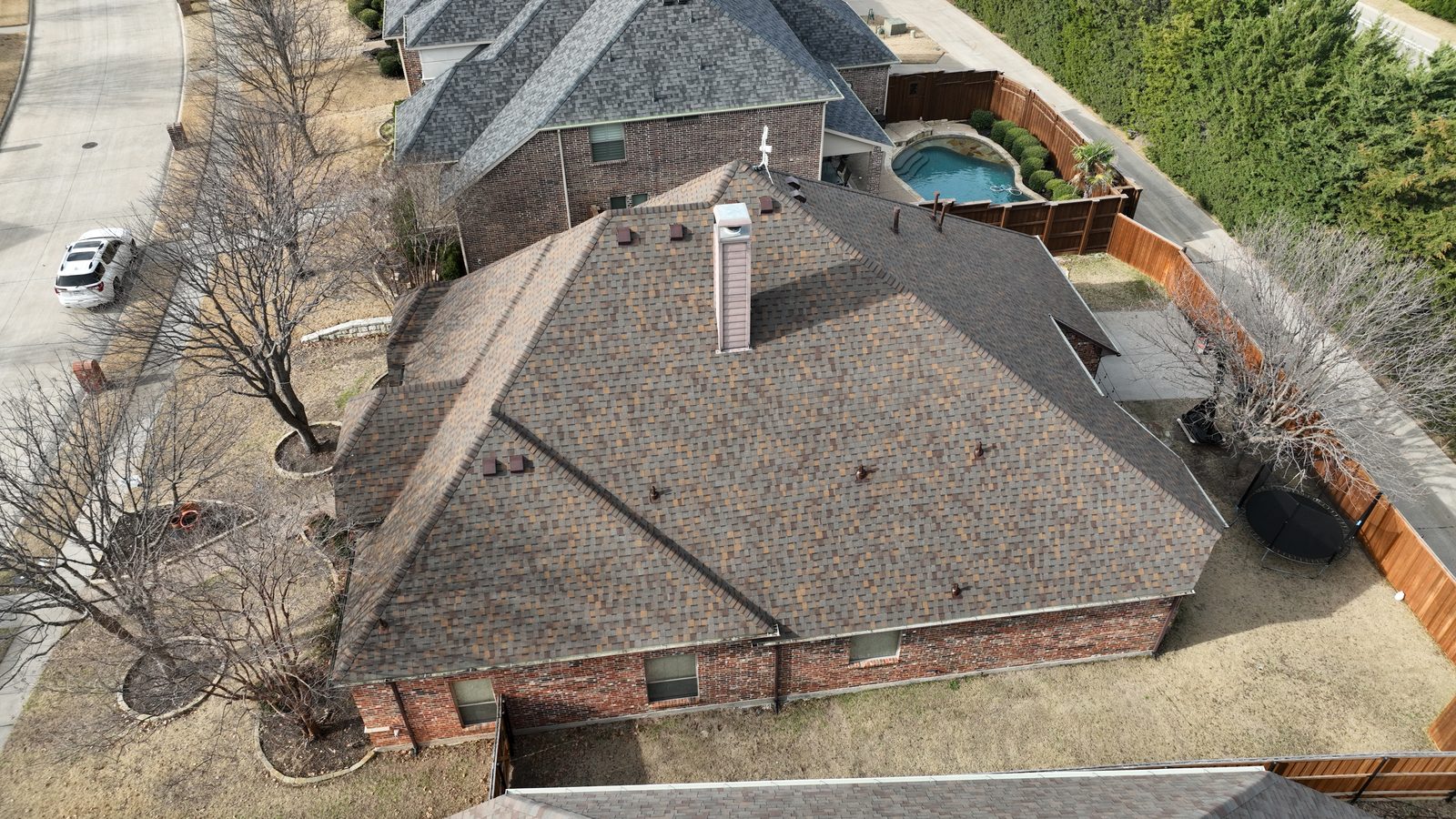
2026 has been hard on North Texas roofs, and the hardest part may still be ahead.
September was the hottest on record for Texas, running more than 8°F above normal. Dallas went 67 days in a row without rain, from mid-July to late September. Then on October 1, with Dallas County still in exceptional drought, DFW logged one of the wettest days in its recorded history.
Now forecasters expect a very strong El Niño to bring a wetter-than-normal stretch, mostly after the New Year and especially in spring (see what El Niño means for your DFW roof). A roof that baked all summer is about to be tested by weeks of rain instead of the occasional storm. Here’s why that matters, how to spot a leak early, and where we expect problems to show up.
Why a hot, dry year sets your roof up to leak
Heat and drought don’t usually make holes. They make weak spots that stay hidden until it rains a lot:
- Pipe boots crack. The rubber collars around plumbing vents dry out under Texas sun. A cracked boot is one of the most common leaks we fix, and one of the cheapest.
- Sealant shrinks. Caulk and sealant around flashing, skylights and exposed nail heads pull away after a summer of heat.
- Shingles wear faster. Heat speeds up granule loss and makes older shingles brittle. When the granules go, the fiberglass mat underneath takes the UV directly, like the shingle in the photo above.
- Gutters fill up. Drought-stressed trees drop leaves and twigs early. Clogged gutters overflow behind the fascia, and that water ends up where it shouldn’t.
None of these may show during a single quick storm. A small opening that gets wet once and dries out for a week is easy to miss.

Why weeks of rain are harder on a roof than one big storm
A long wet pattern doesn’t give anything time to dry. Water that seeps in around a cracked boot or a gap in the flashing keeps feeding into the same decking, insulation and drywall, storm after storm. That’s how a small leak becomes soft decking, stained ceilings or mold in the attic, and why the first sign is often inside your house, not on the roof.
Signs of a roof leak to watch for this winter
Inside:
- Brown or yellow stains on ceilings, especially near exterior walls, chimneys or bathrooms
- Bubbling or peeling paint where the wall meets the ceiling
- A musty smell in a closet or upstairs room
- Damp or matted insulation, or dark spots on the wood, in the attic
Outside (from the ground):
- Shingles that are a different color, lifted at an edge or missing
- Granules piling up at the bottom of downspouts
- Gutters overflowing or pulling away during rain
- Dark streaks on the fascia or siding below the roofline
Not every ceiling stain is a leak. Attic condensation can look the same. Our post on ceiling stains: roof leak or condensation? explains how to tell the difference (and our ventilation post covers winter condensation).

How to find a roof leak after a heavy rain
You can do a lot of the detective work safely from inside your house:
- Go into the attic during or right after a rain, with a good flashlight. Daylight hours are best. Step only on joists.
- Look up, not just down. Water rarely drips straight down from the hole. It runs along rafters and the underside of the decking first. Find the wettest spot, then follow the trail uphill.
- Check every penetration. Look closely around plumbing vents, exhaust fans, chimneys and skylights. These are the usual suspects.
- Mark it and photograph it. Put a piece of tape or a chalk mark at the spot and take photos. That saves time (and money) when a roofer comes out.
- Stay off the roof. Wet shingles are slick, and cold shingles are brittle. Finding the exact source from the outside is our job.
Where we find leaks after a dry summer
In our experience across Rowlett, Rockwall, Wylie and Garland, leaks after a long dry spell show up most often at:
- Plumbing vent pipe boots
- Chimney and sidewall flashing (our flashing post goes deeper)
- Valleys, where two roof slopes meet and water concentrates
- Skylights
- Exposed nail heads and ridge caps
[Zack/John: add a quick real example here, e.g., “After the Oct 1 storm we saw ___.”]
What to do before the wet season sets in
The cheapest leak is the one fixed before it reaches your ceiling. Most of the repairs above are small jobs if you catch them now, and schedules are open in December and January. For what typical repairs run in DFW, see our roof leak repair cost guide.
Frequently asked questions
Why is my roof leaking only in heavy rain?
Usually it’s a small opening, like a cracked pipe boot, a gap in flashing or a lifted shingle, that only lets water in when there’s enough volume or wind-driven rain to reach it. Heavy or sideways rain exposes problems a light shower never touches.
Can a roof leak if no shingles are missing?
Yes. Most leaks we find come from flashing, pipe boots and sealant, not missing shingles.
Does homeowners insurance cover a roof leak?
If a sudden event like wind, hail or a falling limb caused it, often yes, minus your deductible. If it comes from age or wear, usually not. Our insurance claim guide walks through the process. [Legal/insurance review before publishing.]
Not sure your roof is ready for the rain?
Riddle Brothers will inspect your roof for free, photograph every weak spot and tell you straight what needs fixing now and what can wait. We’ve worked on DFW roofs since 2013. Call (214) 884-8346 or schedule your free inspection.
Sources: NIDIS Southern Plains Drought Status Update (Oct 22, 2026); NWS Fort Worth Extended Range Discussion (Nov 8, 2026); NOAA CPC Seasonal Outlook Discussion (Nov 19, 2026).